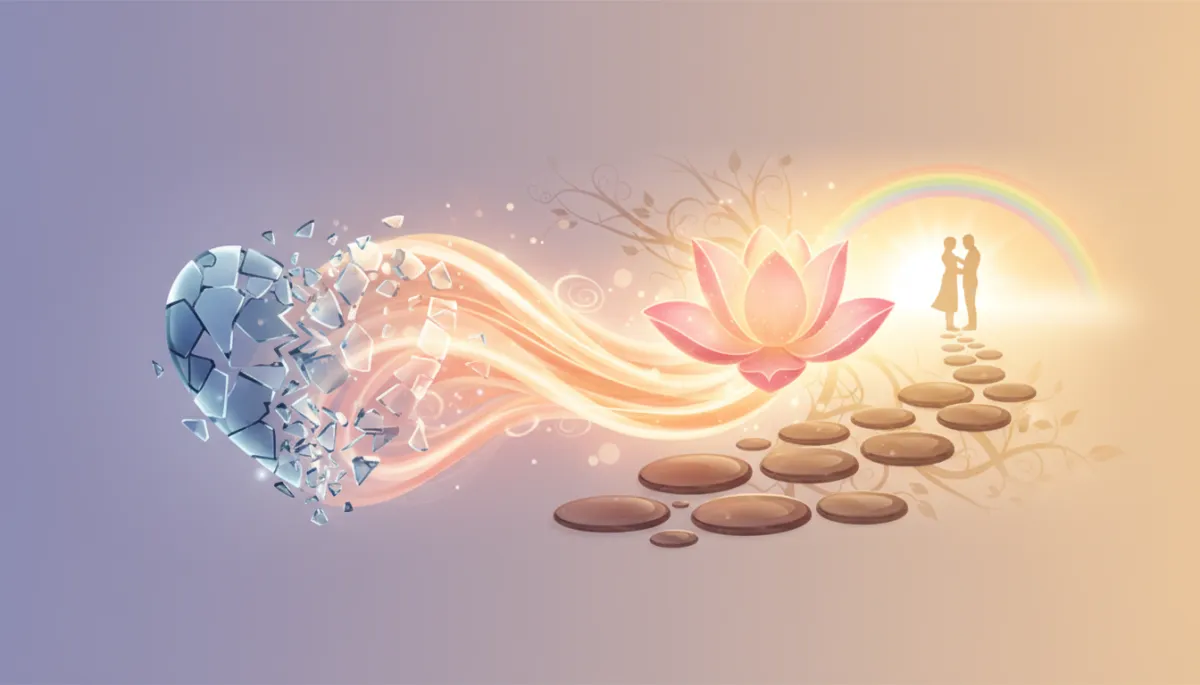
Love Again Without Comparing to Your Ex
Relationships, Healing, Personal Growth
You Can Love Again Without Comparing Them to Your Ex
Loving again after heartbreak is possible and it doesn’t have to mean erasing your past. It means healing, growing, and choosing not to measure every new person against someone who no longer walks beside you.
Healing From Past Relationships Takes Time and Intention
Healing from a past relationship is not about pretending it never mattered. It is about acknowledging that it shaped you, while refusing to let it define the rest of your life. The end of a relationship can leave echoes: familiar songs, shared places, inside jokes that suddenly hurt. Those echoes are normal. They are not proof that you are “stuck”; they are proof that you are human and capable of deep connection.
Real healing begins when you stop asking what was wrong with you and start asking what you learned. Instead of replaying every argument, you gently notice patterns: where you abandoned your own needs, where you ignored red flags, where you grew in patience or empathy. Healing is less about rewriting the story and more about reading it honestly and then putting the book back on the shelf so you can live the next chapter.
Letting Go of Comparisons in New Love
When someone new enters your life, it is tempting to hold them up against your ex like a measuring stick. You may catch yourself thinking, “My ex would never have done that,” or “At least my ex was more affectionate.” These comparisons feel like protection, but they quietly sabotage connection. They keep you half-present, with one foot in the past and one in the present, never fully standing anywhere at all.
To avoid this, notice when you compare and gently call yourself back. You might say internally, “That was then. This is now. This person is not my ex.” Give the new relationship permission to be different, not better or worse. Different in pace. Different in communication style. Different in how safety and affection are expressed. When you allow difference instead of demanding duplication, you give love a chance to show up in a new form that might actually fit who you are today.

New connections flourish when you stop asking them to repeat old stories.
Becoming the Right Person for Future Relationships
It is easy to create a checklist for your “ideal partner,” but a more powerful question is, “Am I becoming the kind of person I would want to be with?” Instead of focusing only on what you hope to receive—loyalty, honesty, emotional maturity ask how you can cultivate those qualities within yourself. Healthy relationships are built by two people who take responsibility for their own growth, not by one person waiting to be “fixed” by another’s love.
Becoming the right person looks like learning to communicate your needs clearly, setting boundaries without guilt, and apologizing without defensiveness. It means tending to your own emotional world through reflection, therapy, journaling, or trusted conversations so that your future partner is not asked to heal wounds they did not create. The more you invest in your own wholeness, the more your next relationship can be a meeting of equals, not a rescue mission.
Growth: Letting Your Heart Evolve, Not Harden
Every relationship, even the painful ones, offers an invitation to grow. Growth is not about becoming colder or more guarded; it is about becoming wiser without losing your softness. You might grow in your ability to spot incompatibility earlier, to honor your deal-breakers, or to walk away when love is no longer healthy. You might also grow in patience, compassion, and your capacity to sit with uncomfortable emotions instead of escaping them.
When you commit to growth, you stop seeing your past relationship as a failure and start seeing it as a teacher. You are not the same person who once stayed too long, loved too little, or lost yourself trying to be enough. You have new insight, new boundaries, and a deeper understanding of what love should feel like. That evolution is what makes future love safer and richer, not the illusion of a “perfect” partner.
Gratitude: Honoring What Was Without Wanting It Back
Gratitude can feel complicated after heartbreak. How do you feel thankful for someone who hurt you, disappointed you, or simply could not stay? Yet gratitude does not mean approving of everything that happened. It means recognizing the gifts that came wrapped in imperfect moments: the laughter you shared, the courage it took to love at all, the parts of yourself that woke up in their presence.
Quietly saying, “Thank you for what you taught me, even if I never want to relive it,” is a powerful act of release. Gratitude softens resentment and loosens the emotional grip your ex may still have on your heart. It allows you to walk away with your dignity intact, carrying lessons instead of bitterness. From that place, you are more open to receiving the kind of love that aligns with who you are now.
Moving Forward Without Forgetting the Past
Moving on is often misunderstood as forgetting. In reality, you do not have to erase your memories to move forward. You can remember who you were with your ex, the dreams you shared, the ways you loved and still choose a new direction. The past is a place of reference, not a place of residence. You can visit it for understanding, but you do not have to live there anymore.
Moving forward looks like building a life that is not organized around what you lost, but around who you are becoming. It means making plans that do not include them, creating new traditions, and allowing fresh memories to form. The love you once had can take its place as a meaningful chapter, not the entire book. You carry the wisdom, the scars, and the softness and you let them guide you toward healthier love, rather than keeping you afraid of it.
You Are Allowed to Love Again, Differently
You can love again without comparing every gesture, every silence, every flaw to your ex. You can love again as someone who has healed enough to see clearly, grown enough to choose wisely, and softened enough to receive love without suspicion. Your past relationship is part of your story, but it is not the ending. The ending has not been written yet and this time, you are writing it with more courage, more clarity, and a heart that knows both how to protect itself and how to open.